Showing posts with label sewing pattern. Show all posts

Friday, June 30, 2017

A 1920s Couture Gown Pattern - A New Pattern Release!

Hello my dears. I'm happy to post today about a research/ reproduction project I've been working on for months!
My collection (hoard) of vintage magazines and quarterlies always makes me happy, but recently they also told me that a pattern in my collection was very special!


The quarterlies often had a few pages of couture designs mingled in with their every day patterns and a 1927 McCall Quarterly was kind enough to inform me that my McCall 5050 was a design by House of Worth!


After much digging, I also found the same pattern advertised a few times in two other magazines from the period, some of which included references to embroidery patterns that could be used to make the dress more unique!


I already had plans to release a reproduction of the pattern, but I decided to hold off until I could really do something special.


I was finally able to hunt down rough images of what all three referenced embroidery designs looked like, and once I had them, I drafted those, too!


And now it's complete! Pattern #3086 is now available in print or download and includes three full-sized embroidery motifs to make it exactly as pictured in the magazines!

1920s Worth Couture Dress #3086.

Most of the reference material has the pattern illustrated for day wear but the sleeveless version in printed silk was advertised as a "Gown of Grace and Gaiety from Paris".
You can find the pattern here.

House of Worth has a strange, special place in my heart. My late mother was obsessed with Worth and the history behind the famed Couture house that launched Parisian Couture as we know it today. Her greatest goal in life was to one day add a Worth gown to her antique clothing collection. A big dream indeed, considering that they are often only found in museums these days. She passed away before ever making her dream a reality. It felt strange, sad, and bitter-sweet to know that I had a pattern of one of their designs and that I couldn't share it with her.
As I'm a pattern collector, and not a really a dress collector, this was essentially my version of her dream and I'm so happy to have realized it a bit for both of us.

For an extraordinary photo collection of House of Worth designs, check out the Metropolitan Museum of Art online catalog.
But beware, bring something to soak up your drool and clear your schedule, because you're going to be there a while...

Happy sewing,


Sunday, March 19, 2017

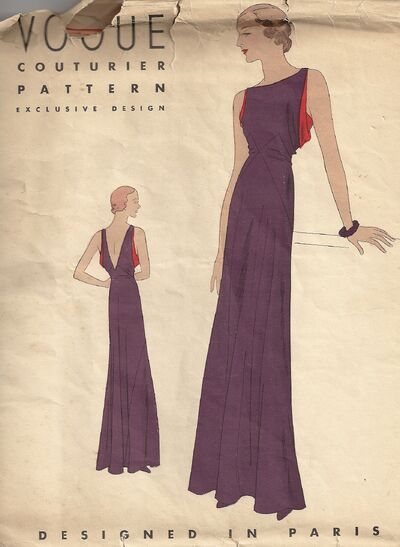
Sew Expensive... Vogue Couturier 232


My dears, this lovely pattern was expensive, naturally.


Just a few days ago, Vogue 232 sold for a shocking $360.

As we've discussed before, there are a lot of reasons that a pattern can go this high or higher, and the value of this one was a combination of two things.
Vogue Couturier patterns are always going to be more valuable than plain old Vogue, owing to their association with actual couture designers (though the designer isn't mentioned in couturier patterns from the 30's like they are in those from the 60's.)
This pattern is from the 1930's and I can count on one hand the number of Vogue Couturier from this decade I've seen for sale in the last year. The highest that I can remember went for just under $400.

Now, unusually for our Sew Expensive posts, I just happen to know the lucky winner of this auction. No, its not me. This particular collector who will remain anonymous is my Pattern Friend. My Pattern Friend and I met a long time back over a Facebook discussion of another rare pattern. We got to talking and realized that we had very similar collecting tastes. We talk patterns quite often and this one came up in conversation.
When I asked her if she cared to comment on why this pattern had such a draw to her, she simply replied "Even a sundress is stylish."

This made me giggle a little because, really, each collector's pattern taste is so unique. Sure there are the sought after, universally acknowledged "high value" patterns, and then there are others that quite honestly have a "Je ne sais quoi" to each individual. Something in it speaks to us, makes us fall a little in love, and perhaps do foolish things to acquire the object of our desire.

Here are a few other Vogue Couturier from the 1930's for your enjoyment....
Vogue 204

Vogue 225 Circa 1933.

Vogue 100. Blurry I know but had to be included anyways.
Vogue 205
Vogue 211 Circa 1933.
How about you, my dears? Do you have any Vogue Couturier patterns in your collection? Have you learned anything interesting about them that you'd like to share with the class? I have just one of these. One... and one will have to be enough. They go too high at auction for me to allow myself to fall in love. Anything more than a brief affair for me and it will all end in tears...

Wednesday, July 6, 2016

Using Evernote to Catalog Your Sewing Pattern Collection


Today, my dear readers, I'm going to talk a bit about keeping track of a large pattern collection. If you've been collecting as long as I have, you know that you can loose track of whether or not you have a specific pattern in your collection. More than once over the years, I've bought a pattern on Ebay or Etsy, only to realize later that I already have the same one in some box or other I've forgotten about.

Recently, at the suggestion of a friend of mine, I downloaded an app called Evernote to my iPad and tried cataloging 15 patterns to see how I liked it. This was on a Friday afternoon, and I liked it so much, that I then spent the rest of the entire weekend photographing and logging a vast section of my collection. It has taken me a while (months, really, the hoard is that big), but slowly and surely I have added my entire collection of sewing patterns and I am so glad that I did (more on that later).

(I'm just going to point out quickly that this isn't a sponsored blog post - I haven't been compensated for writing this, I just really love this app!)

The app is pretty user friendly and can sync across your mobile and desktop devices quite seamlessly once downloaded. To give you an idea of how handy that is, a few days ago, I was killing time in a doctor's office waiting room and scrolling through patterns on Ebay using my phone to pass the time. I found a great dress pattern and thought, I should buy that, but it does look a bit familiar... So I switched to my Evernote app briefly and typed in the pattern name and number, and sure enough, there it was in my collection! I saved $20!

The pattern in question... though having two of this gem wouldn't be the worst thing ever...
Before I go into the many benefits of having your collection catalogued, let me show you how easy it is.

Wednesday, October 10, 2012

Sew Expensive: Patou Paris Designer


 For today's Sew Expensive post, I have for you a very rare pattern. I know a lot of us were watching this little baby on Ebay and it was pretty clear that something like this was going to go for a whole lot of money.


This beautiful 1920's Pictorial Review 5565 sold on Ebay for an amazing $275.


~ On a side note, I have bought patterns from this seller a few times before and have always been very happy with my purchases. You might want to check out her shop on eBay. ~


So what was so rare about this particular pattern? Sewing patterns from the 1920's are rare just by themselves and don't come up very often. Evening gown patterns from the 1920's are almost impossible to find. Sewing patterns from Pictorial Review and the 1920's are even more rare and sought after but that's not the whole appeal. I think the biggest factor at play in this pattern's value is that it's a designer pattern. Designer patterns from this era are almost unheard of and this one is an original Patou design.

For those of you who aren't familiar with him, Jean Patou was a very popular French designer until his untimely and early death in 1936.


He is well known for eradicating the short boxy 'flapper' look by lengthening skirts and elongating the feminine silhouette.

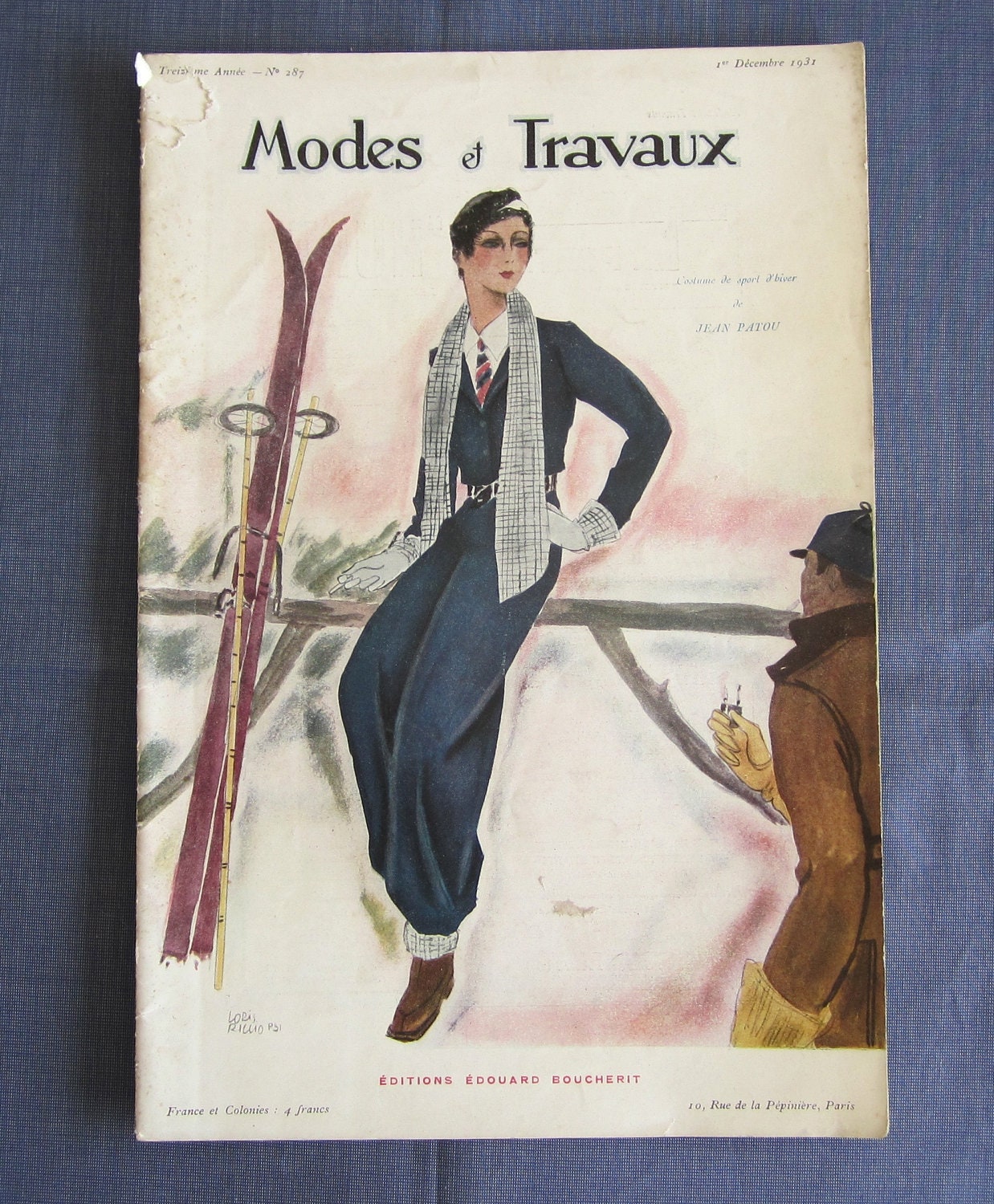
Patou is also well known for designing sportswear for women. I have a 1931 French Modes et Travaux magazine in my collection (recently added to my etsy shop because I don't have the wall space to frame them all) that features a Jean Patou ski outfit on the cover.


How about you? Do you think that this amazing little piece of sewing pattern history was worth the price tag?

Thursday, February 23, 2012

Ohh La La Pin Up Sew Along... Sewing your Muslin.


We've reached that point in the sew-along where we have to roll up our sleeves and sew a muslin. I know, it seems like a waste of time, and I know a lot of you don't have a ton of time to sew as it is. But trust me, you don't want to waste your valuable sewing time making something only to find out it doesn't fit properly. So take an hour (yeah, it will go quickly) and get your muslin started.

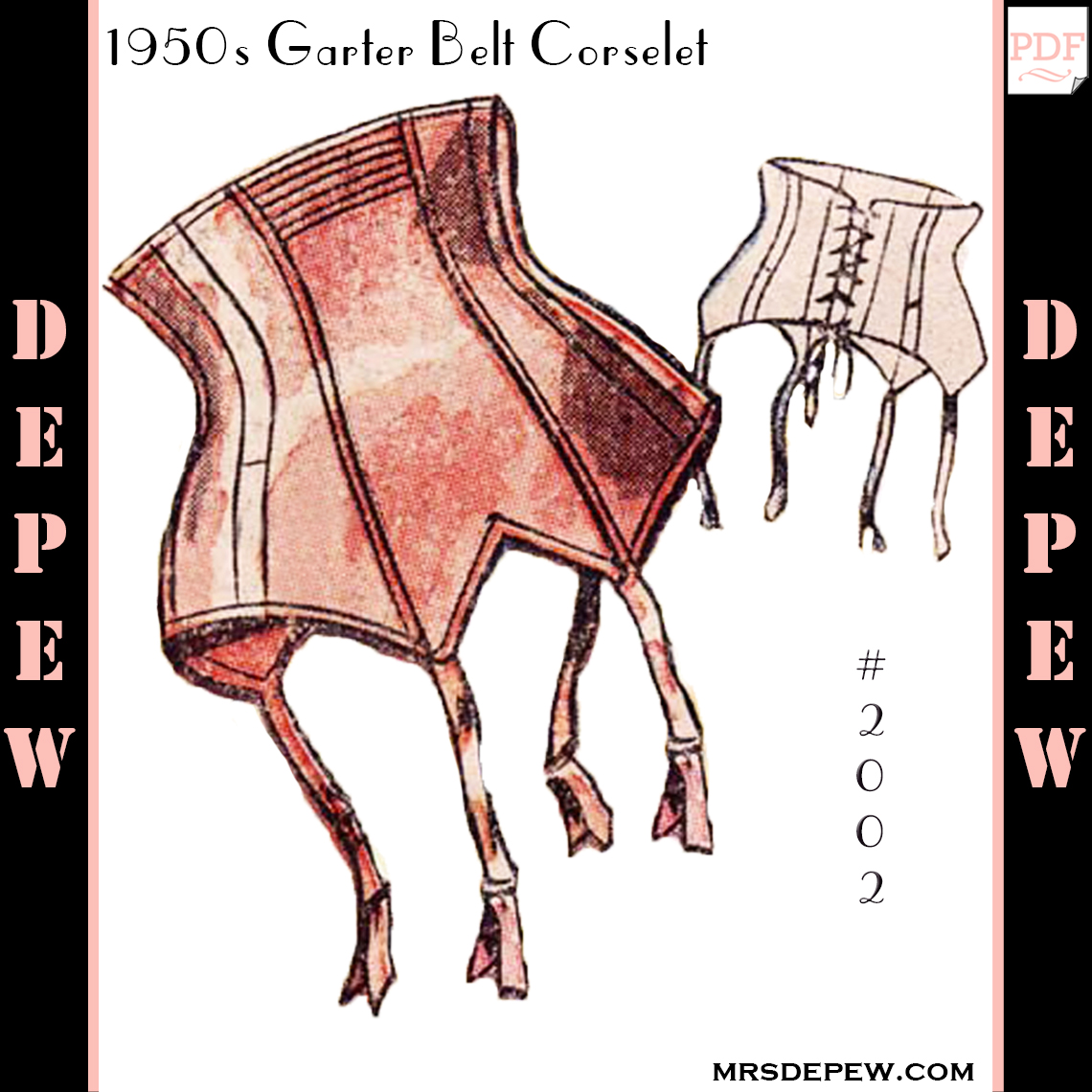
The pattern we're using...

When I cut out my muslin I like to do it on my cutting mat, with my nifty seam allowance guide stuck to my rotary cutter, and I can blast through it in minutes.

Yes, Yes I do use spools of thread as pattern weights.
You won't be binding any edges, sewing on any garter clips or any of that nonsense. This is just to make sure that your corset closes, and isn't too small or large, or short, or tall, or hot or cold.

My big stroke of brilliance with my last muslin was to write my seam number on my seam allowances. What? I know! Happy thought, right? Who hasn't wanted to just take a marker and scribble markings on their fabric so they won't smudge or disappear. Muslin graffiti.


What I'm listening to while I sew:


Sarah from Ohh Lu Lu has put together an excellent post on what you need to do to get your muslin ready.  You can read all about it here.

Or Below:

I have to admit... I can be a lazy sewist, when I am sewing for myself, but lingerie muslins take no time to sew, because they are so small! No need to worry about interfacings or linings for your mock-up -You just need something to test your fit!

Friday, February 10, 2012

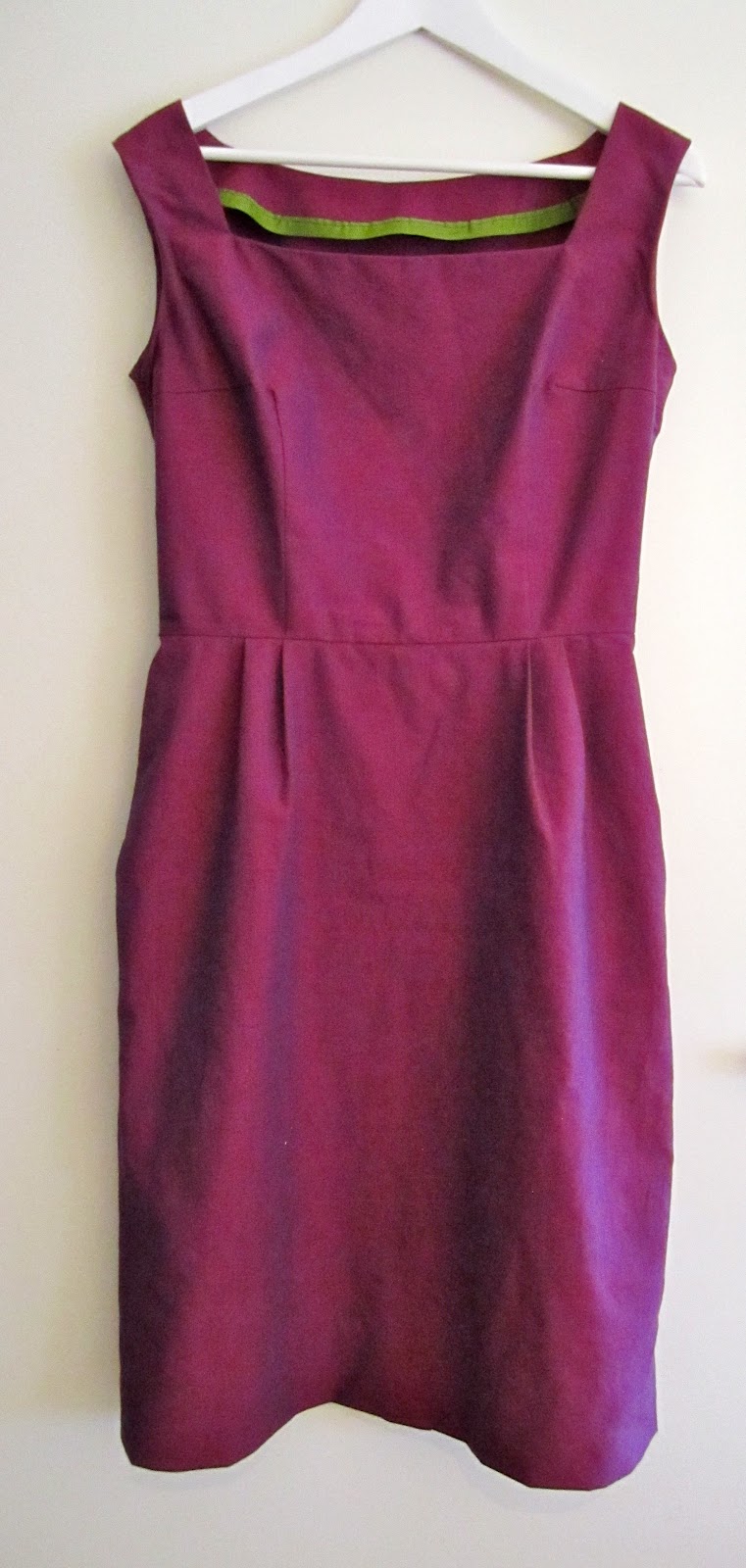
The Job Interview Dress

As many of you know, I've been a jobless, stay-at-home seamstress for the last several months. It's really hard to get a job here and my best options have been grocery clerk or waiting tables... not exactly easy to swallow when I've worked so hard for my (apparently useless) education.
I've been sewing this dress for good job interview juju. In other words, build it and they will come. Sew the dress and get the interview.


Well, as I was sewing in the armhole facing, I got a call for an interview. This is HUGE. For every 50 jobs I've applied for, I've heard back on 2. It's weird being the immigrant, so to speak, in a country where they want to hire locals. Today was my interview, a scant 12 hours after I finished getting the hem in this little baby.


So this morning I threw the dress on, along with my lucky underwear and my lucky high heels and off I went. Well, first, I took photos.


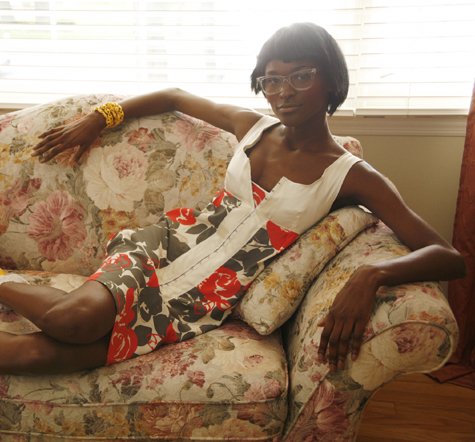
Now, this isn't the pose I struck for the interview, just so you know. That's not how a girl should get a job. In the interview, I looked more like this:

Monday, August 15, 2011

All about pdf patterns

The new frontier of sewing patterns is digital. Everything seams to turn to digital at some point and sewing patterns are no exception. E patterns are now being offered by the big four (Simplicity, Butterick, McCall's and Vogue) as well as a dozen websites including Etsy.com.

The great thing about digital patterns is that you can buy them and print for a fraction of the cost. There's no waiting for the mail to come, as most are emailed to you within 24 hours, or better, directly downloaded. I highly recommend Burdastyle.com for downloading patterns. Here's my favorite:


That's right,  you click download, and this pattern (which is free, by the way) is on your computer. You hit print, tape the pieces together, and start sewing.

Now, my very favorite thing about digital patterns is that some enterprising individuals, (yes, including myself) have started taking rare, expensive, hard to find patterns and making them available for download. Most of these are vintage originals whose copyrights have expired. Some are just used as inspiration to create an original pattern that still reflects the style and design so sought after in certain digital patterns.
Mary Anne Bandeau Pattern

Now there are some drawbacks to print at home patterns. They can be bulky and hard to store. There are two ways I store my larger printed patterns. One solution is to store them in a labelled file folder. My favorite way to store them though, is to print the pattern picture out and tape it to an envelope. I use the 6" x 9" manilla envelopes so they fit right in with my other regular patterns.

Marilynn Apron Pattern
Another great thing about pdf patterns is that once you buy them, they are saved on your computer. If you rip a piece, or lose one, or want to make it in a different size, you can just print again.
Some pdf patterns are larger and more complicated to put together. Many buyers are put off by the paper and ink they'll have to use up on their home printer. An easy way to get around this is to save the pattern to a cd or small thumb drive, take it to your local print shop (xerox, staples, they all do it) and have them print it for you.

So just in case you're interested, and so you know I'm not just plugging my shop, here are a few of my favorite pattern pdfs:
LaPrairieLady
Also from LaPrairieLady
From PatternRunway
From BettieMarie
Any questions?